The Eiffel Tower: The Landmark Paris Almost Tore Down

It’s hard to imagine Paris without the Eiffel Tower. It’s the city’s icon, printed on postcards, keychains, and just about every souvenir you can think of. But here’s the twist: when it was first built, Parisians didn’t fall in love with it at all. In fact, they wanted it gone — and by 1909, the tower was almost dismantled and lost forever.

“Eiffel Tower under construction, July 1888. Public domain image via Wikimedia Commons.”

A Tower Nobody Wanted

The Eiffel Tower was built for the 1889 World’s Fair, celebrating the 100th anniversary of the French Revolution. Gustave Eiffel and his team designed it to show off France’s modern engineering skills.

But instead of awe, many Parisians felt horror. Writers, artists, and intellectuals signed petitions calling it an ugly iron monster. The novelist Guy de Maupassant even claimed he ate lunch inside the tower’s restaurant every day because, from there, it was the only place in Paris where he didn’t have to look at it. That’s commitment.

And the thing is, the tower wasn’t even meant to be permanent. The plan was to take it down after 20 years. So by 1909, its future looked pretty shaky.

A Surprising Savior: Radio

What saved it wasn’t beauty or sentiment, but practicality. Around this time, radio technology was developing fast, and the French military realized the Eiffel Tower made a perfect giant antenna. At over 300 meters high, it could transmit signals farther than anything else in Paris.

Tests showed how useful it could be for national defense, and suddenly this “temporary eyesore” was too valuable to tear down. The tower got its second chance.
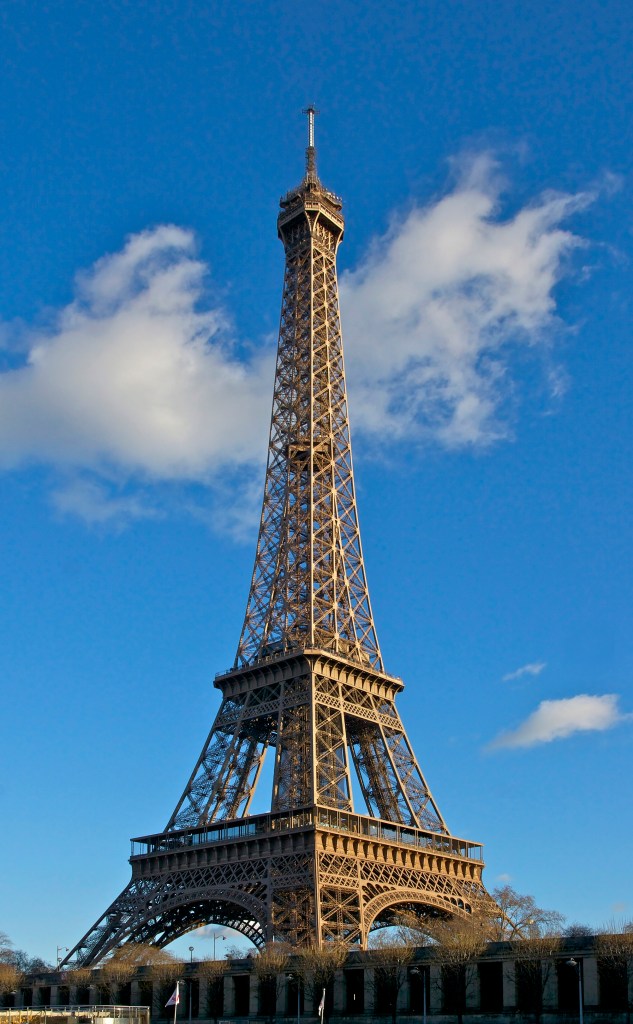
“Eiffel Tower viewed from a boat on the Seine, Paris. Public domain image via Wikimedia Commons.”

From Eyesore to Icon

Once the tower found its new role, people’s opinions began to change. Over time, it became less of a nuisance and more of a symbol — not just of modern technology, but of Paris itself.

By the 20th century, the Eiffel Tower was here to stay. And slowly, the same Parisians who once signed petitions against it began to see it as something worth keeping. Today, it’s hard to picture Paris without it — though if someone had asked in 1909, plenty of locals would’ve happily packed it away like last season’s fashion.

The story of the Eiffel Tower is a reminder that even the things we treasure most weren’t always beloved from the start. Sometimes what seems strange or ugly at first just needs time (and in this case, a really good radio signal) to prove its worth.

And honestly, if anyone suggested tearing it down today, I think half the world would probably chain themselves to the iron beams before letting a single bolt come loose.

Michelangelo’s Revenge in the Sistine Chapel: When a Critic Ended Up in Hell

When we think of Michelangelo, we think of genius: the sculptor of David, the painter of the Sistine Chapel ceiling, the man whose name is practically a synonym for Renaissance brilliance. But he wasn’t just a distant “master” from history books. He was human — proud of his work, sensitive to criticism, and not above a little bit of revenge.

And one day, a critic discovered just how dangerous it could be to offend an artist whose canvas was the wall of the Sistine Chapel itself.

The Setting: The Last Judgment

In the 1530s, Michelangelo was asked to paint a massive fresco on the altar wall of the Sistine Chapel — The Last Judgment.

“Full view of Michelangelo’s The Last Judgment fresco (1536–1541), Sistine Chapel. Public domain image via Wikimedia Commons.”

This was not a soft, decorative scene. It was intense, dramatic, and full of movement: Christ at the center, angels blowing trumpets, saints rising to glory, and sinners dragged into hell.

Michelangelo filled the wall with muscular, twisting figures, many of them unclothed, showing humanity at its most vulnerable when facing divine judgment. For some viewers, it was breathtaking. For others, it was… too much.

The Critic Steps In

One of the most vocal critics was Biagio da Cesena, the Papal Master of Ceremonies. After seeing the fresco, he remarked that such a display of nudity was “more fit for taverns and bathhouses than a papal chapel.”

Now imagine being Michelangelo in that moment. He had spent years on scaffolding, straining his back and pouring his heart into this enormous work. And instead of admiration, he got compared to tavern art. It must have stung — and you can almost picture him deciding he wasn’t going to let that insult slide.

Michelangelo’s Creative Revenge

Michelangelo didn’t argue with Biagio in person. He had something much more effective at hand: paint. Quietly, and perhaps with a small smile, he returned to his fresco and gave his critic an unforgettable role.

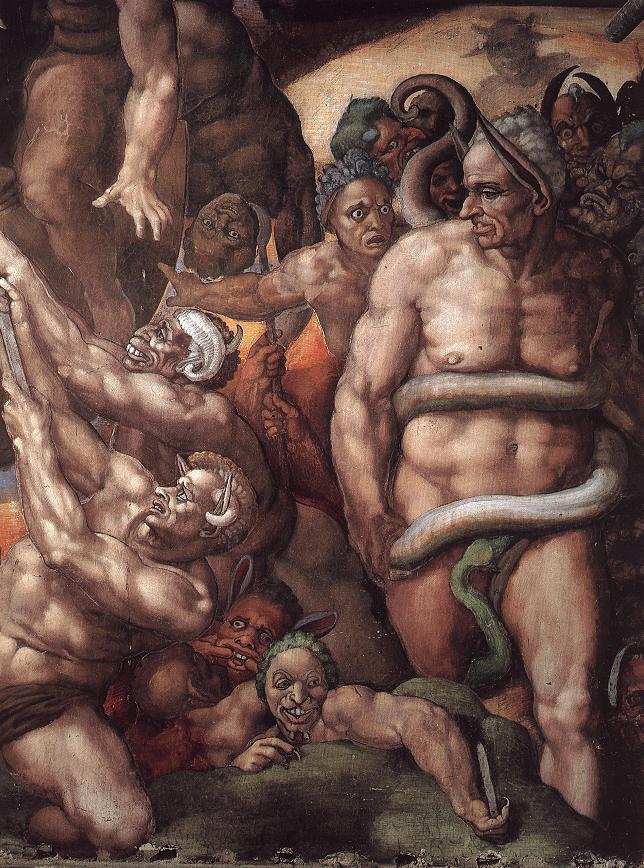
“Detail from Michelangelo’s The Last Judgment (1536–41), showing Biagio da Cesena depicted among the damned. Public domain image via Wikimedia Commons.”

On the wall of The Last Judgment, among the damned souls tumbling into hell, Michelangelo painted a figure with Biagio’s face. To drive the point home, he added donkey ears — a Renaissance symbol of foolishness — and a serpent coiled around the body.

Anyone who knew Biagio could recognize him. It was Michelangelo’s way of saying: you think my art belongs in a bathhouse? Fine — now you belong in hell.

The Outcry

When Biagio spotted his likeness on the wall, he was horrified. He hurried to Pope Paul III and demanded that Michelangelo be ordered to paint over it.

But the pope had a sense of humor. His response was simple: “My authority does not extend to hell. You must remain there.”

And that was the end of the matter. The insult stayed, and Michelangelo had the last word — or rather, the last brushstroke.

Why This Story Still Matters

What makes this tale so delightful is not just Michelangelo’s boldness, but the way it captures the human side of great art. We often imagine masterpieces as distant and untouchable, but here’s a reminder that behind them were very real people, with tempers, egos, and rivalries.

Michelangelo’s fresco is one of the most profound works of art in the world, yet hidden within its soaring vision of divine judgment is this small act of very earthly revenge. Millions of visitors still see it today — a little private quarrel preserved forever on one of history’s grandest stages.

It shows that even the greatest artist of the Renaissance was still human — and sometimes he used his brush to make a point.