The Eiffel Tower: The Landmark Paris Almost Tore Down

It’s hard to imagine Paris without the Eiffel Tower. It’s the city’s icon, printed on postcards, keychains, and just about every souvenir you can think of. But here’s the twist: when it was first built, Parisians didn’t fall in love with it at all. In fact, they wanted it gone — and by 1909, the tower was almost dismantled and lost forever.

“Eiffel Tower under construction, July 1888. Public domain image via Wikimedia Commons.”

A Tower Nobody Wanted

The Eiffel Tower was built for the 1889 World’s Fair, celebrating the 100th anniversary of the French Revolution. Gustave Eiffel and his team designed it to show off France’s modern engineering skills.

But instead of awe, many Parisians felt horror. Writers, artists, and intellectuals signed petitions calling it an ugly iron monster. The novelist Guy de Maupassant even claimed he ate lunch inside the tower’s restaurant every day because, from there, it was the only place in Paris where he didn’t have to look at it. That’s commitment.

And the thing is, the tower wasn’t even meant to be permanent. The plan was to take it down after 20 years. So by 1909, its future looked pretty shaky.

A Surprising Savior: Radio

What saved it wasn’t beauty or sentiment, but practicality. Around this time, radio technology was developing fast, and the French military realized the Eiffel Tower made a perfect giant antenna. At over 300 meters high, it could transmit signals farther than anything else in Paris.

Tests showed how useful it could be for national defense, and suddenly this “temporary eyesore” was too valuable to tear down. The tower got its second chance.
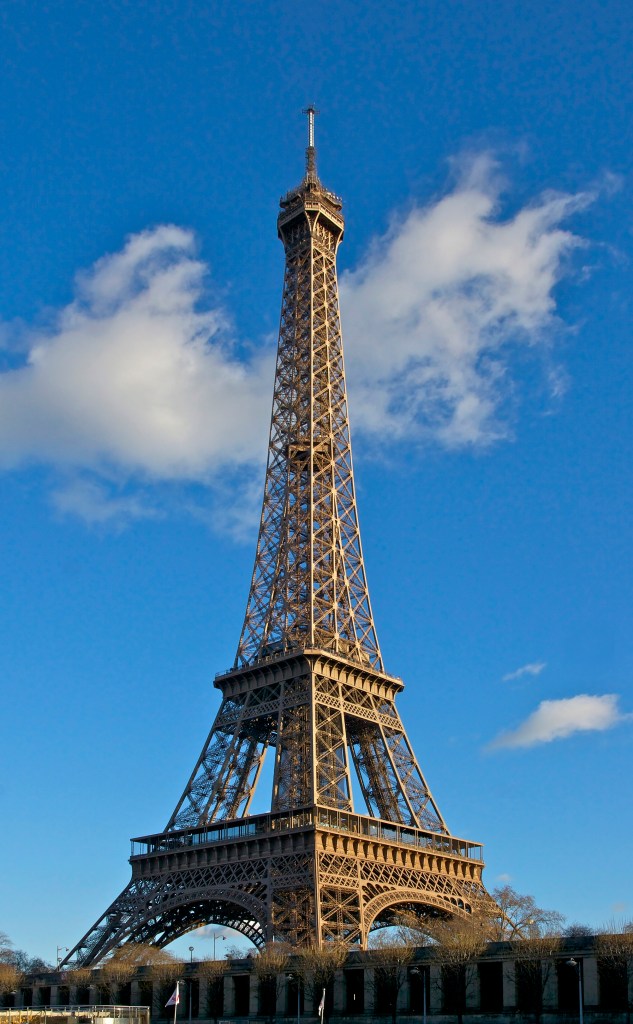
“Eiffel Tower viewed from a boat on the Seine, Paris. Public domain image via Wikimedia Commons.”

From Eyesore to Icon

Once the tower found its new role, people’s opinions began to change. Over time, it became less of a nuisance and more of a symbol — not just of modern technology, but of Paris itself.

By the 20th century, the Eiffel Tower was here to stay. And slowly, the same Parisians who once signed petitions against it began to see it as something worth keeping. Today, it’s hard to picture Paris without it — though if someone had asked in 1909, plenty of locals would’ve happily packed it away like last season’s fashion.

The story of the Eiffel Tower is a reminder that even the things we treasure most weren’t always beloved from the start. Sometimes what seems strange or ugly at first just needs time (and in this case, a really good radio signal) to prove its worth.

And honestly, if anyone suggested tearing it down today, I think half the world would probably chain themselves to the iron beams before letting a single bolt come loose.

Napoleon vs. the Rabbits: The Most Adorable Defeat in History

When we think of Napoleon Bonaparte, we imagine a brilliant military strategist, feared across Europe, a man who reshaped nations with his ambition. What we don’t usually picture is Napoleon… running away from a horde of fluffy bunnies. Yet that’s exactly what happened in one of history’s most delightful (and slightly ridiculous) episodes.

“Napoleon I Bonaparte (as King of Italy), ca. 1805 – Andrea Appiani (1754–1817). Oil on canvas. Reproduction via The Yorck Project / Wikimedia Commons. Public domain.”

A Grand Plan for a Hunt

It all began when Napoleon decided to host a rabbit hunt for himself and his top officers. This wasn’t unusual — aristocrats often organized hunts as a way to celebrate victories or simply show off their leisure. Napoleon’s secretary, Alexandre Berthier, was put in charge of arranging the event.

Berthier, being efficient (but perhaps not very experienced with wildlife), didn’t want to leave anything to chance. Wild rabbits can be unpredictable, so instead of relying on hunting luck, he purchased hundreds — some say up to 3,000 — rabbits from local farmers. The idea was simple: release the rabbits, let the officers show off their skills, and everyone goes home with a story and some rabbit stew. Easy, right?

The Release

The day came. Napoleon, dressed for the hunt, stood ready with his men. The cages were opened, and hundreds of fluffy rabbits hopped out into the field.

But instead of scattering in fear like wild rabbits usually do, these farm-raised bunnies had a very different reaction. They looked around, saw Napoleon and his officers… and charged.

Yes, charged.

The Fluffy Invasion

Turns out, these weren’t wild rabbits used to running for their lives. They were tame, farm-fed rabbits. They associated humans with food. So when released, they didn’t think, “Run for your life!” — they thought, “Oh good, the food guys are here!”

Witnesses said the rabbits swarmed toward Napoleon and his men in waves. At first, there was laughter. A few dozen rabbits running your way is kind of cute. But then it became hundreds. Then thousands. Imagine a furry tide of ears, whiskers, and little paws bounding straight for the most powerful man in Europe.

Napoleon tried to shoo them away with his riding crop. Officers swung their guns. But the rabbits kept coming, climbing up trousers, hopping into carriages, surrounding everyone.

(If this were me, I think I’d just give up and start handing out carrots. Sometimes surrender is the only option when your enemy is this fluffy.)

“AI-generated illustration of Napoleon’s rabbit hunt, a humorous historical anecdote from 1807.”

Napoleon Retreats

Finally, Napoleon realized this was not a battle he could win. He retreated, jumping into his carriage as the rabbits swarmed the wheels. His proud hunting party turned into a chaotic retreat, soldiers scattering, chased by bunnies that just wanted snacks.

It was, perhaps, the only time Napoleon ever lost a “battle” so decisively and so adorably.

The Aftermath

The story quickly became a joke among those who heard it. Napoleon’s reputation as a master of Europe survived, of course — after all, defeating coalitions of nations is a bit more impressive than losing to rabbits. But still, the image of the mighty general driven off the field by fluffy farm animals remains one of the strangest moments in history.

And honestly? I think it’s perfect. Even the greatest conquerors in history had their humbling moments. For Napoleon, it just happened to involve bunnies.